
Planning a home project in Central Pennsylvania can feel overwhelming, especially when it comes to building permits. Navigating the rules is crucial, but did you know that many everyday home improvements may not require a building permit in PA? Understanding these exemptions can help you save time, money, and stress, while still keeping your project safe and compliant.
At NB Ward Builders, we want to empower homeowners in Harrisburg, Hershey, Carlisle, and Mechanicsburg with clear, practical information. Whether you’re tackling minor repairs, refreshing your interiors, or adding curb appeal, let’s break down when a building permit is not required in PA and what you need to know before you start swinging a hammer.
Understanding the Basics: Pennsylvania UCC Permit Exemptions
Pennsylvania’s Uniform Construction Code (UCC) sets the foundation for building permit rules statewide. While permits are needed for most structural work, the code also outlines a range of “ordinary repairs” and small-scale improvements that are exempt from permit requirements. The key is whether your project impacts structural elements, safety systems, or violates local ordinances.
Keep in mind, over 2,500 municipalities in Pennsylvania can set stricter rules, so always double-check with your local office. However, the following categories generally fall under statewide exemptions and can help you plan with confidence.
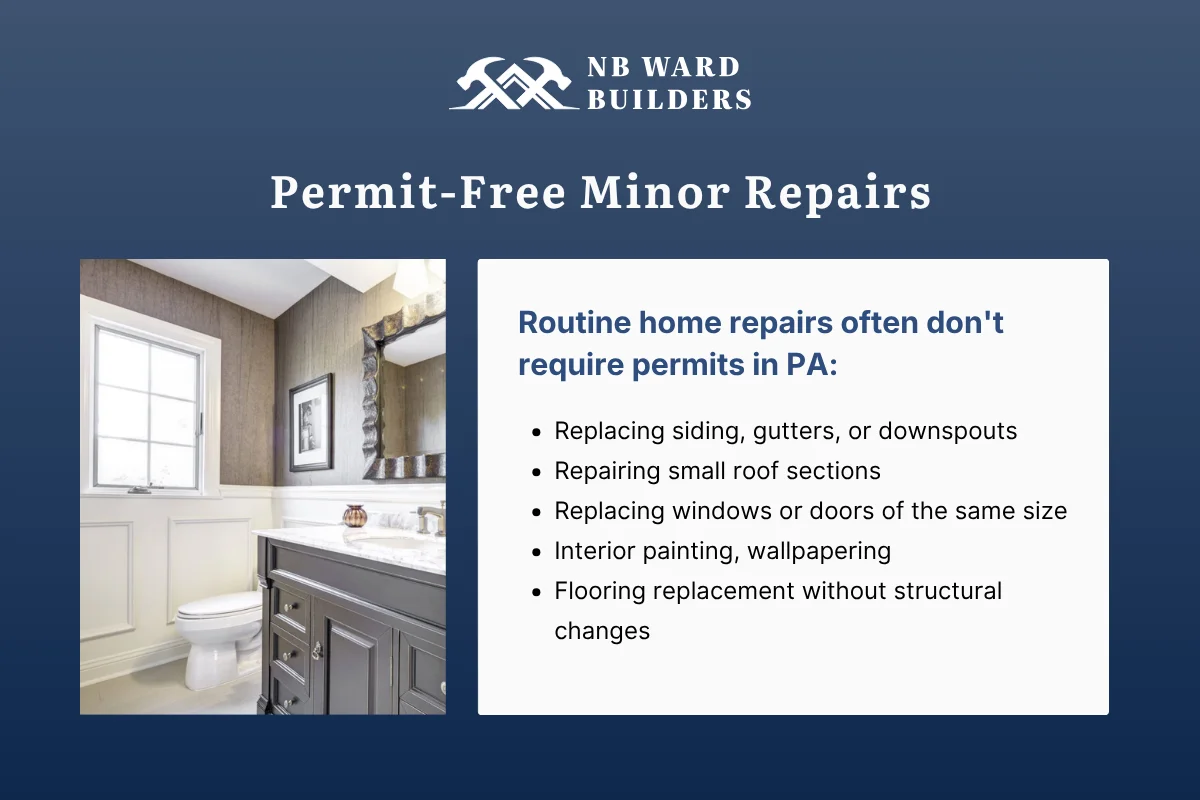
Minor Repairs and Routine Maintenance that Do Not Require Permits
Minor Repairs and Routine Maintenance
Many routine home repairs and maintenance tasks do not require a building permit in PA, as long as they don’t affect the structure or major systems. These exemptions are designed to keep homeownership simple and affordable, especially for regular upkeep.
Replacing siding, gutters, or downspouts, without altering structural components
Repairing or patching small roof sections (no full roof replacements)
Window or door replacements that use the same size and location
Fixing leaky faucets or unclogging drains
Changing light bulbs or replacing electrical fuses
What is not covered as “minor”? Any work that involves cutting wall studs, removing load-bearing elements, or altering paths of egress will always require a permit. When in doubt, err on the side of caution and consult your local building department.
Cosmetic Improvements: Painting and Flooring
Interior Painting Projects
Wondering if you need a permit just to refresh your walls? The answer is a resounding no. Interior painting is considered a zero-permit activity under the UCC. This includes:
Painting walls, ceilings, trim, and cabinetry
Wallpapering or decorative wall treatments
Touch-ups and full-room color changes
Because painting doesn’t touch structural or fire safety systems, there’s no need for regulatory oversight. Even in larger projects, like a whole-house repaint, permits are not required unless painting is part of a larger, permitted remodel.
Flooring Replacement
Flooring replacement is another common project where a building permit is not required in PA, provided it is a straightforward swap. This includes installing carpet, tile, hardwood, or laminate flooring in the same footprint.
Exceptions arise if your project involves:
Repairing or replacing subfloors in load-bearing areas
Replacing stair treads with significant wear (over 40% thickness)
Changing the structural configuration of floors
For most homeowners, a simple flooring upgrade is permit-free, but always be cautious with staircases and subfloor work.
When Permits are Needed for Window and Door Replacements in PA
Window and Door Replacement Rules
Replacing old windows or doors is a great way to improve energy efficiency and curb appeal. In Pennsylvania, you do not need a building permit for “like-for-like” replacements, meaning new units that fit into existing openings without structural changes.
Swapping out window sashes or frames of identical size
Replacing doors within the same opening and size
Upgrading to modern double-pane glass with no change to structure
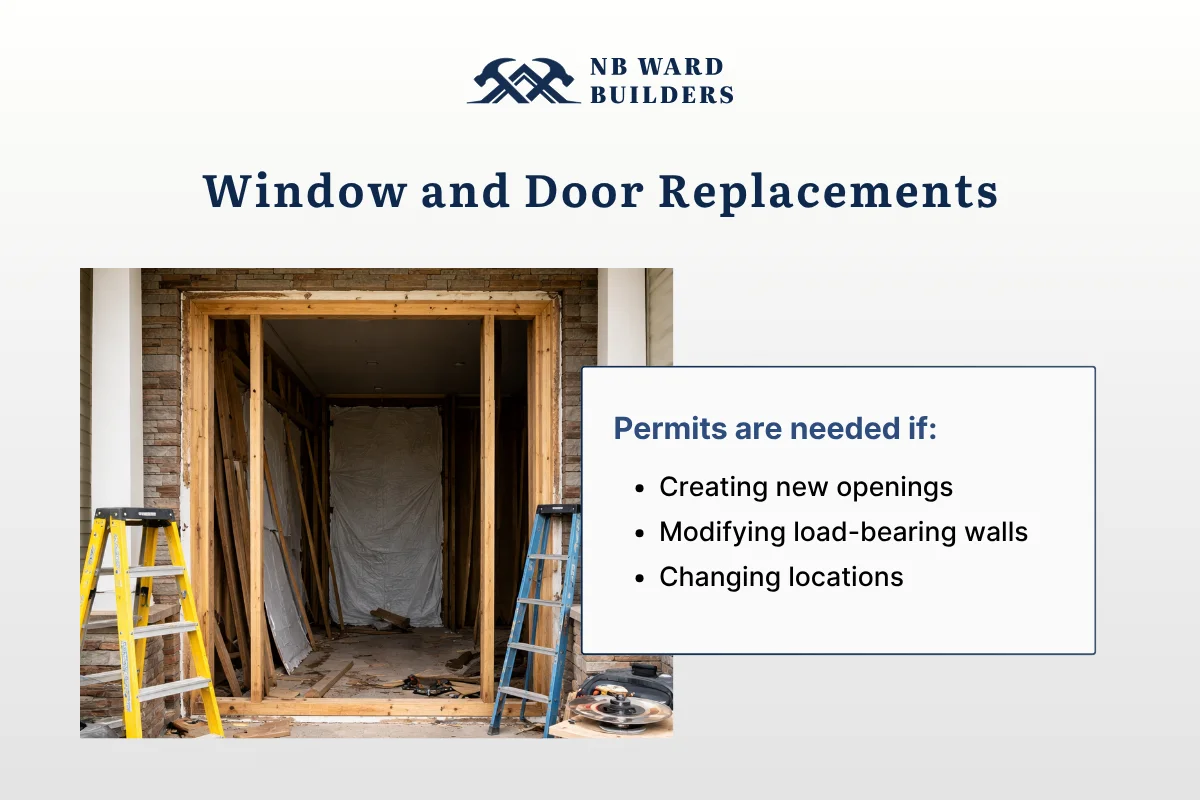
Permits are required if you are:
Creating new openings or enlarging/shrinking existing ones
Modifying load-bearing walls or headers
Changing window or door locations
Upgrading egress windows in bedrooms
Historic districts may have additional requirements, so check with your local municipality if your home is in a designated area.
Fencing: What Height Triggers a Permit?
Fences are a popular way to enhance privacy and security. In most residential zones in Pennsylvania, fences under six feet tall are exempt from building permit requirements. However, zoning regulations often apply, so you may still need a zoning or administrative permit.
Decorative garden borders under 30 inches are typically permit-free
Fences between 30 inches and six feet often require a simple zoning review
Fences over six feet always require a building permit and structural plans
Additional zoning rules may address setbacks, front-yard placement, and material types. If you’re replacing an existing fence with the same height and location, you’re generally in the clear. For anything taller or closer to property lines, always confirm with your local office.
Sheds and Detached Structures: Size Matters
If you are considering adding a shed, playhouse, or small storage building, Pennsylvania’s UCC allows permit-free construction for detached accessory structures under 1,000 square feet serving a single-family home. However, most municipalities set stricter thresholds, commonly 120 to 200 square feet.
Sheds under the local size limit, without permanent foundations
Detached playhouses or storage units well within property setbacks
No electrical or plumbing included
Always check your local zoning requirements and obtain zoning approval before building, even if a full building permit is not required. Improper siting or non-compliance can result in fines or forced removal of the structure.
Deck Construction: When a Permit Is Required
Decks are one of the most common projects where permit rules are misunderstood. In Pennsylvania, you do not need a building permit for decks that:
Are not attached to the home
Are less than 30 inches above grade at any point
Cover less than 200 square feet (local rules may vary)
Once you exceed these limits, a full permit with structural plans and inspections is required. Permits ensure safety for your family and future homeowners. Unpermitted decks can complicate selling your home or lead to costly rebuilds. For more on custom deck options, see our custom deck builder service.
Emergency Repairs: Safety Comes First
Emergencies can’t wait for paperwork. Pennsylvania law allows immediate repairs without a pre-permit if there is an urgent safety or health risk, such as busted pipes, electrical hazards, or storm damage. However, you must submit a permit application within three business days and provide documentation of the emergency and completed work.
This exception is for true emergencies only. Elective upgrades or non-urgent repairs must still follow standard permit rules to avoid stop-work orders or fines.
Local Variations: Why You Should Always Check with Your Municipality
While the Pennsylvania UCC provides broad permit exemptions, local governments in Harrisburg, Hershey, Carlisle, and Mechanicsburg may have their own ordinances. These often lower exemption thresholds or add requirements for historic properties, flood zones, or specific neighborhoods.
Permitted shed sizes may be smaller than the state’s 1,000-square-foot limit
Setback, height, or material restrictions can apply to fences and decks
Special rules may exist for multi-family homes or commercial properties
Before starting any project, reach out to your local code enforcement or zoning office for site-specific guidance. This step could save you from expensive corrections later.

Risks of Skipping Permits in Pennsylvania
The Risks of Skipping Permits When They’re Required
It’s tempting to skip the paperwork, but doing so can have costly consequences:
Stop-work orders and construction delays
Fines or penalties from your municipality
Difficulty selling your home without proof of permitted work
Insurance claim denials for unpermitted projects
Safety risks for your family and guests
When in doubt, consult with professionals like NB Ward Builders to determine if your project is truly exempt. We help homeowners in Central PA plan and execute renovations that meet all code requirements.
Frequently Asked Questions about Building Permits in PA
What if my municipality requires stricter permits?
Local ordinances can override state exemptions. Always check with your local code office for the most accurate and current requirements for your specific address.
Can I do multiple exempt projects at once?
Yes, as long as each project individually meets exemption criteria and does not collectively trigger structural changes or safety concerns.
Does a permit exemption mean no inspections?
Typically, yes, unless your project is part of a larger permitted renovation or is flagged for safety concerns. Always use safe, best-practice construction methods regardless of permit status.
Are permits required for rental properties?
Permit exemptions generally apply to single-family homes. Multi-family or rental units may face more stringent rules and regular inspections.
How NB Ward Builders Helps You Navigate Permits and Exemptions
Our hands-on approach means we handle the paperwork, design, and construction for your project, so you don’t have to worry about missing a step. Whether you’re considering a kitchen remodel, basement upgrade, or custom deck, our team ensures everything is completed to code and tailored to your needs.
We stay updated on state and local permit exemptions to make your renovation process smoother. For major remodels that do require permits, we’ll guide you through every stage, from application to final inspection.
Summary Table: When Is a Building Permit Not Required in PA?
Project Type Permit Required? Notes Interior Painting No Cosmetic only, not part of permitted remodel Flooring Replacement No Unless subfloor or stair structure is altered Minor Repairs (exterior, roofing, gutters) No No structural changes allowed Window/Door Replacement No Like-for-like swap, same opening/size Fences < 6ft (residential) No (may need zoning permit) Local rules apply Sheds < Local Size Limit No (zoning approval needed) Most local limits 120-200 sq ft Decks < 30" above grade, not attached No Local area square footage limits may apply Emergency Repairs No (apply within 3 days) Must be a true safety emergency
Your Next Step: Start Your Project with Confidence
Understanding when a building permit is not required in PA can make your next home improvement smoother and more affordable. At NB Ward Builders, we help you navigate every aspect of renovation, from design to compliance, so you can focus on enjoying your upgraded space.
Serving Harrisburg, Hershey, Carlisle, and Mechanicsburg, our experienced team is ready to guide you through project planning, permit requirements, and flawless execution. If you’re unsure whether your project qualifies for a permit exemption, or if you want to ensure your remodel is done right, get a quote or call us at (303) 956-1665 today.
Meta Description Suggestion: Discover when a building permit is not required in PA. Learn which home projects are exempt and how to avoid permit headaches in Central Pennsylvania.

%201.svg)
%201.svg)
%201.svg)

