
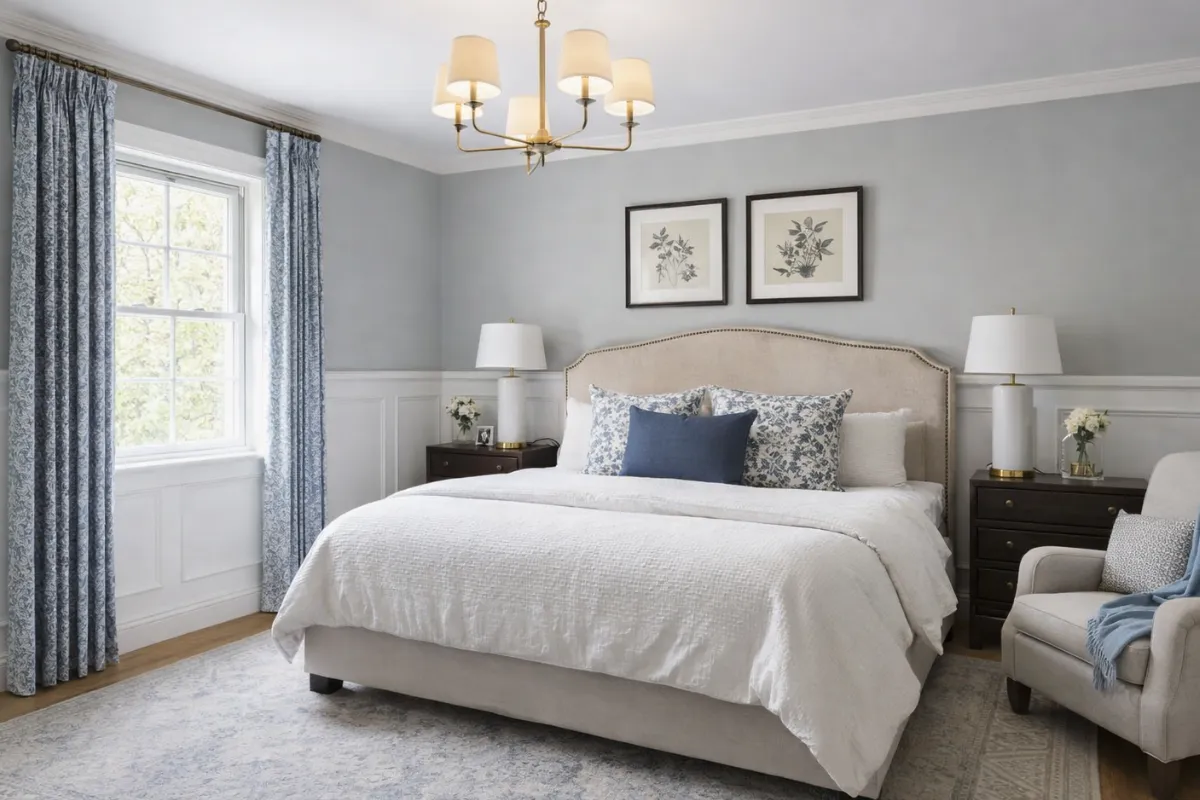
Wainscoting is a timeless way to add elegance, texture, and architectural interest to bedroom walls. Whether you want to create a cozy retreat, a modern statement, or a classic sanctuary, wainscoting offers versatile design options that can be tailored to any bedroom size or style. In this guide, NB Ward Builders explores the best wainscoting ideas for bedrooms, including placement strategies, recommended heights, style choices, and material options, so you can make informed decisions for your next bedroom upgrade.
For more than 15 years, NB Ward Builders have helped Harrisburg, PA homeowners upgrade and improve their homes. If you have any questions after reading this guide, please contact our team.
Why Wainscoting Works in Bedrooms
Wainscoting is more than just a decorative feature. It serves both aesthetic and functional purposes, making it a smart investment for homeowners who want to elevate their bedroom’s look and feel. Here’s why wainscoting is a popular choice:
- Visual Interest: Wainscoting adds depth and dimension to flat walls, breaking up large surfaces and creating a focal point.
- Protection: It shields walls from scuffs, dents, and everyday wear, especially in high-traffic areas or kids’ bedrooms.
- Versatility: With a range of styles, materials, and finishes, wainscoting can complement any design, from traditional to contemporary.
- Value: Well-installed wainscoting can increase your home’s resale value by enhancing its architectural appeal.
With the right design, wainscoting can make small bedrooms feel more spacious and large bedrooms feel more intimate and inviting.
Top Bedroom Wainscoting Design Ideas
Bedroom wainscoting design is all about creativity and harmony. The following design ideas can help you personalize your space, whether you prefer bold statements or subtle elegance. Each style offers unique visual and functional benefits, allowing you to tailor your bedroom to your taste and needs.
1. Bold Color Contrasts for Modern Appeal
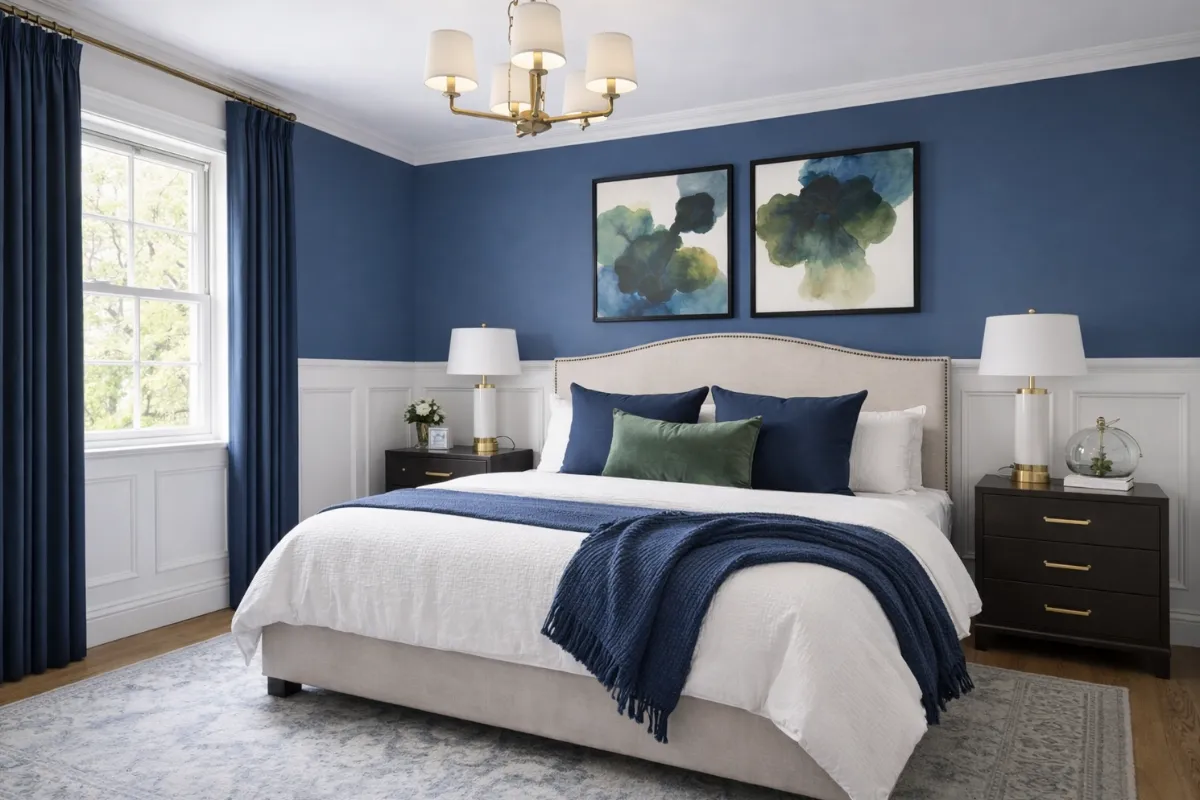
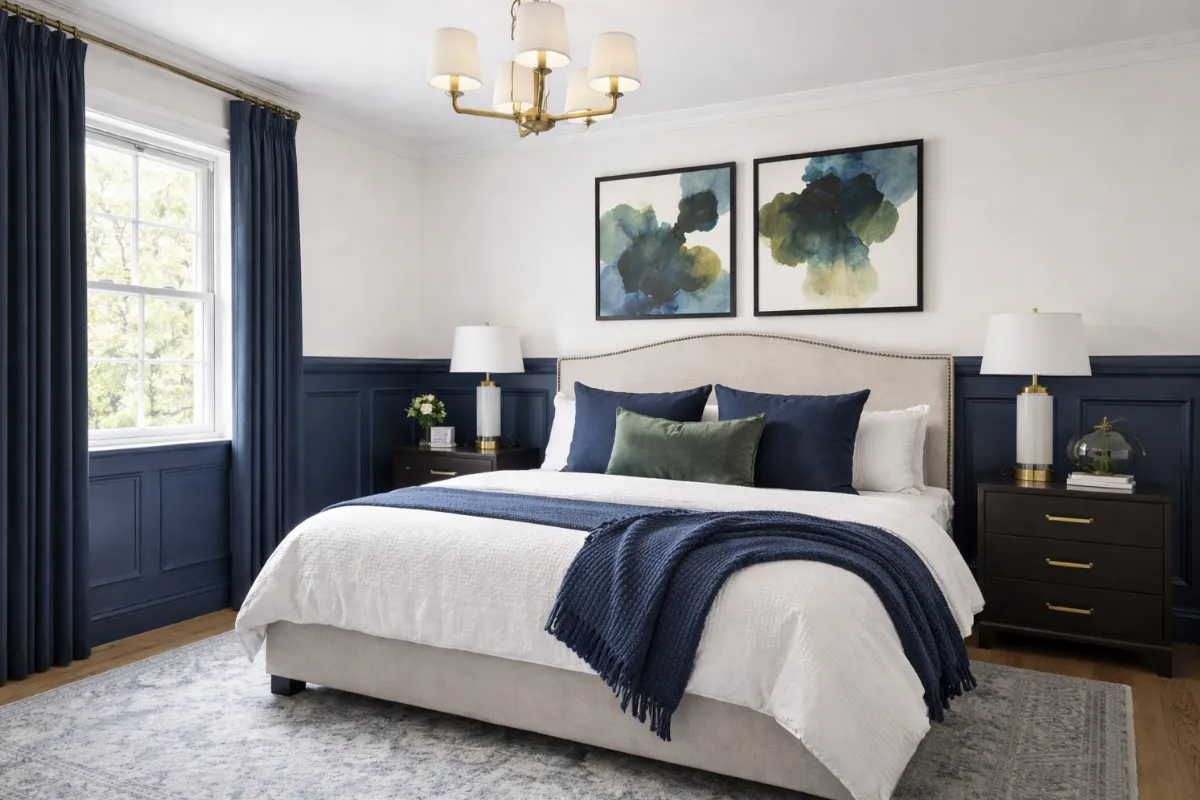
Moving beyond traditional white, painting wainscoting in bold or deep hues can dramatically change the mood of your bedroom. For example, pairing navy blue or forest green panels with lighter upper walls creates a striking, contemporary look. This approach works especially well when the wainscoting color is echoed in bedding, curtains, or accent pillows, tying the room together for a cohesive design statement. According to design experts, two-tone wainscoting, where the lower panels are a different shade than the upper wall, adds dynamic visual interest and can make a small bedroom feel more spacious by drawing the eye upward.
2. Accent Walls: Focus on the Bed
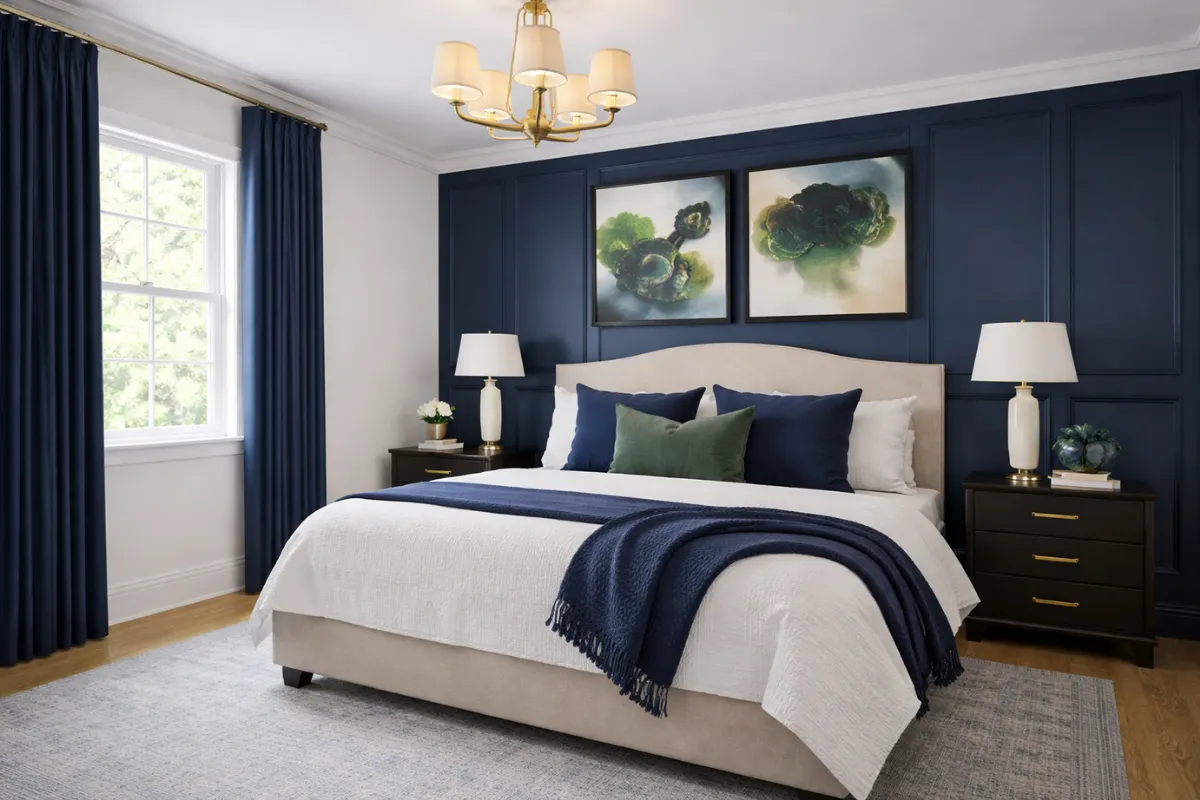
Using wainscoting to create an accent wall behind the bed is a popular strategy for adding drama and focus to the room. This technique works well in both large and small bedrooms, as it draws attention to the bed while keeping the rest of the space clean and uncluttered. Accent wall wainscoting can be installed in a variety of patterns, from classic raised panels to sleek vertical boards, depending on your style preference.
3. Full-Room Wainscoting for a Cohesive Look
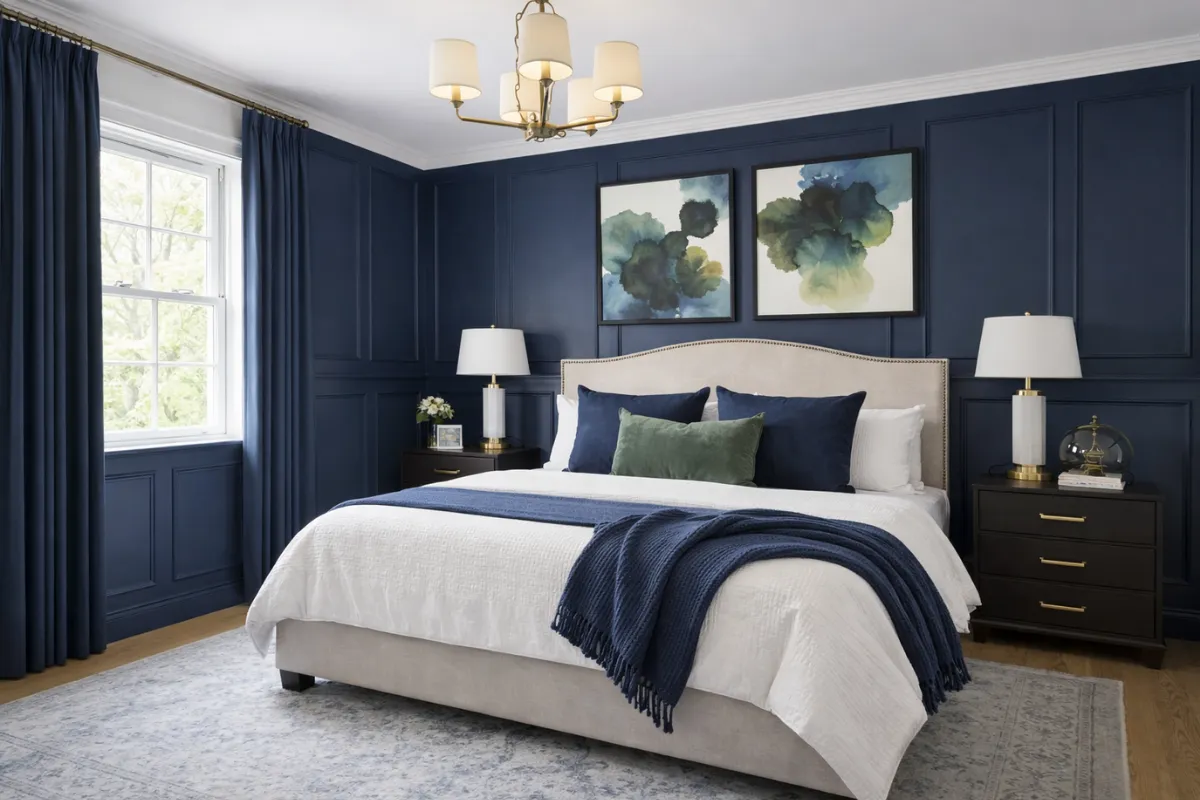
Wrapping all four walls with wainscoting creates a unified, enveloping effect that’s perfect for traditional or cottage-style bedrooms. This approach works best with lighter colors or subtle textures to avoid overwhelming the space. Full-room wainscoting can be paired with crown molding and baseboards for a polished, high-end finish.
4. Mix and Match Materials for Texture
Wainscoting isn’t limited to wood. Modern materials like MDF, PVC, and composite panels offer durability and moisture resistance, making them ideal for bedrooms with varying humidity levels. Mixing materials, such as combining wood panels with wallpaper or painted drywall, can add texture and interest without sacrificing practicality.
5. Geometric Patterns and Custom Designs
For a truly unique look, consider custom wainscoting designs featuring geometric patterns, chevrons, or even integrated shelving. These bespoke solutions can turn your bedroom walls into works of art, reflecting your personal taste and creativity.
Placement Strategies: Behind Beds and Full Walls
Where you place wainscoting in the bedroom can dramatically affect the room’s feel and function. Strategic placement not only enhances aesthetics but also defines zones and improves the overall flow of the space. Consider these approaches for optimal impact:
Behind the Bed
Installing wainscoting on the wall behind the bed highlights the headboard and creates a natural focal point. Vertical board-and-batten styles here can draw the eye upward, making ceilings appear taller and the space cozier. This placement is especially effective in rooms with minimal architectural detail, as it adds instant character and depth. It also provides a durable, easy-to-clean surface where pillows and bedding may frequently touch the wall.

Full Wall Perimeter
Wrapping wainscoting around the entire room provides a balanced, cocoon-like effect. Shiplap or raised panels can make large bedrooms feel more intimate and restful, while also protecting walls from scuffs and wear. This approach is ideal for master suites or guest rooms where you want to create a unified, enveloping atmosphere. Full perimeter wainscoting can be customized in height and style to suit both modern and traditional interiors, offering flexibility for future updates.
Mid-Height Perimeter
Encircling the bed’s perimeter at mid-height (about 36–42 inches) adds subtle definition and frames the sleeping area without dominating the room. This strategy works well in both small and large bedrooms, providing a sense of structure while leaving plenty of wall space for artwork or shelving. Mid-height wainscoting is also practical, as it protects walls from furniture and daily use, and can be easily repainted or updated as trends change. For guidance on achieving a balanced look, see this resource on wainscoting height.
Full-Height Accent
For dramatic effect, extend wainscoting from floor to ceiling on one or more walls, especially in rooms with high ceilings or Victorian styling. Full-height wainscoting creates a sense of grandeur and can be used to highlight architectural features or create a gallery wall. This approach is particularly striking in bedrooms with tall windows or ornate moldings, as it draws attention to the room’s vertical lines and adds a sense of luxury.
Always align wainscoting with architectural features like window sills or headboards for a seamless, intentional look. In asymmetrical rooms, adjust panel sizes or placement to maintain visual flow and harmony.
Recommended Heights for Bedroom Wainscoting
Getting the height right is crucial for a balanced, professional appearance. The standard recommendation is to cover about one-third of the wall height, but this can be adjusted based on ceiling height and style:
- 8-foot ceilings: 32–42 inches is ideal for cozy, balanced coverage.
- 9-foot ceilings: 36–48 inches works well for proportional balance.
- 10-foot or higher: Up to 54–60 inches for dramatic, formal bedrooms.
Use the rule of thirds as a starting point, but always test with mock-ups to ensure the height complements your furniture and room proportions. Aligning the top of the wainscoting with the headboard or window sills can help maintain visual harmony.
Style Choices and Material Options
Wainscoting styles for bedrooms range from traditional to modern, each offering unique benefits:
- Raised Panels: Classic and formal, these add depth and texture to traditional bedrooms.
- Flat Beadboard: Simple vertical grooves create a relaxed, cottage feel.
- Shiplap: Horizontal or vertical planks with subtle gaps bring rustic or coastal charm.
- Board-and-Batten: Vertical battens over flat panels add rhythm and modernity.
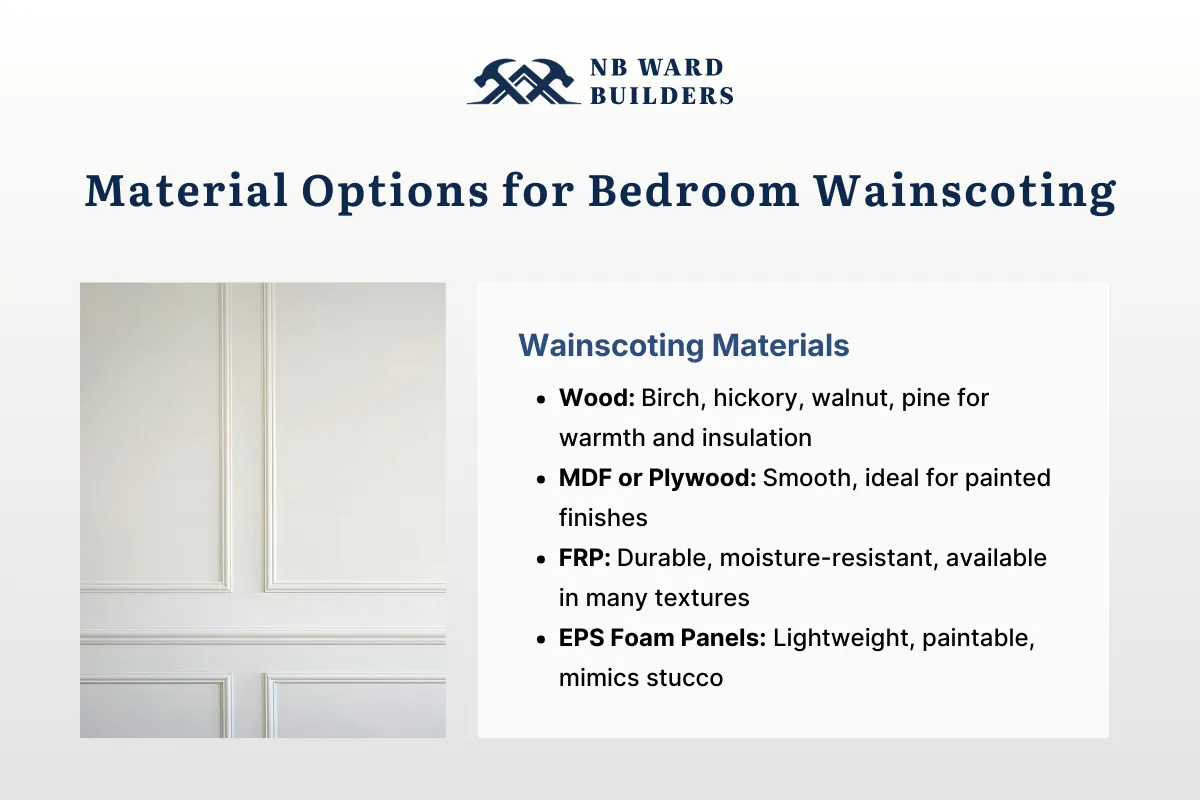
Material selection impacts both aesthetics and practicality:
- Wood: Birch, hickory, walnut, or pine offer natural warmth, sustainability, and insulation. Acoustic wood panels can enhance bedroom quietness.
- MDF or Plywood: These engineered options provide a smooth, polished look and are ideal for painted finishes.
- FRP (Fiberglass-Reinforced Plastic): Durable and moisture-resistant, FRP comes in various textures and colors for versatile bedroom applications.
- EPS Foam Panels: Lightweight and paintable, these mimic stucco and are suitable for custom bedroom aesthetics.
For accent walls, shiplap wood adds warmth behind beds, while painted MDF ensures crisp lines for full-room installations. Vibrant paints or soft whites can be used on any material to match your desired mood.
Integrating Styles: Behind Beds and Full Walls
Combining wainscoting styles and placements can personalize your bedroom:
- Light shiplap behind beds: Contrasts beautifully with dark walls and makes headboards pop.
- Two-tone full walls: Vibrant lower panels with neutral uppers energize the room without chaos.
- Board-and-batten at 42 inches: Frames beds and adds structure.
- Wallpaper above wainscoting: Adds whimsy and personality, especially behind beds.
- Chantilly Lace board-and-batten: Refreshes traditional setups with a modern twist.
For luxury, walnut shiplap behind beds or FRP full walls offer durability and style. Heights of 36–48 inches work well for both accent and full-wall applications.
Ready to Transform Your Bedroom?
Wainscoting is a versatile, stylish, and practical upgrade for any bedroom. With the right materials and design, it can create a restful retreat, a bold statement, or a timeless classic. NB Ward Builders specializes in bedroom wainscoting installation in Harrisburg, PA, offering expert guidance, quality materials, and flawless craftsmanship for every project.
If you’re ready to explore bedroom wainscoting ideas or want a quote for your renovation, contact NB Ward Builders today. Let us help you create a bedroom that’s as functional as it is beautiful.

%201.svg)
%201.svg)
%201.svg)

