
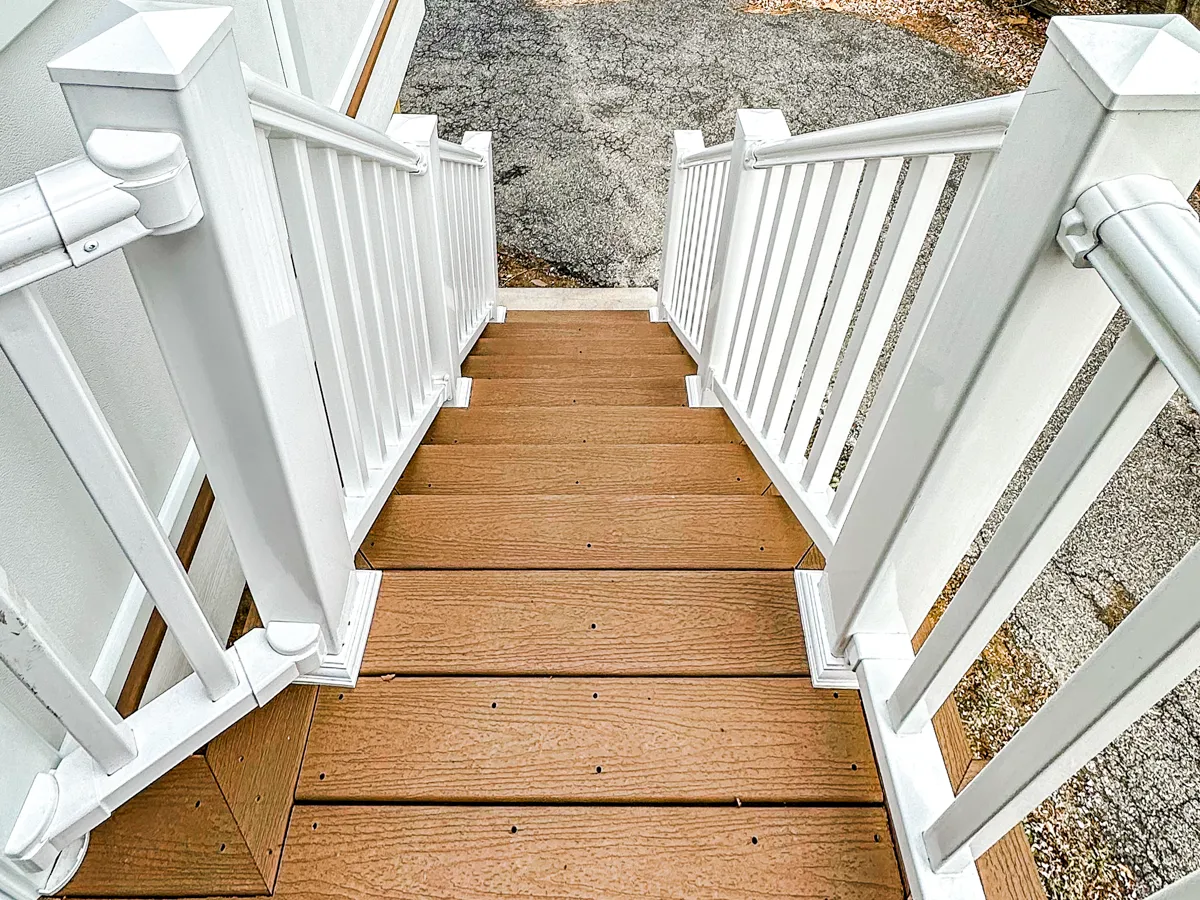
Choosing the right decking material is a crucial decision for homeowners in Harrisburg, PA, especially with the region’s humid summers and unpredictable weather. PVC decking has emerged as a leading option for those seeking a long-lasting, low-maintenance, and visually appealing outdoor space. In this guide, we’ll explore what makes PVC decking unique, its advantages and drawbacks, and how it compares to other popular materials, so you can make an informed choice for your next deck project.
In Harrisburg, PA, NB Ward Builders bring over 15 years of home renovation experience to every project. If you have any questions after reading this guide, please reach out to our team.
What Is PVC Decking?
PVC decking is a synthetic material made entirely from polyvinyl chloride, a high-strength cellular plastic. Unlike traditional wood or even composite decking, PVC contains no organic material, making it exceptionally resistant to moisture, mold, and rot. This 100% synthetic construction is what sets PVC apart, offering a solution that can withstand the harshest outdoor conditions for decades.
PVC vs. Vinyl: Not the Same Thing
It’s important to note that PVC decking is technically different from hollow vinyl decking. PVC is a solid, cellular product designed for strength and durability, while vinyl is often used for railings or fencing and lacks the structural integrity required for deck boards. This distinction ensures that PVC decking can handle heavy foot traffic and outdoor furniture without warping or sagging.
Key Benefits of PVC Decking
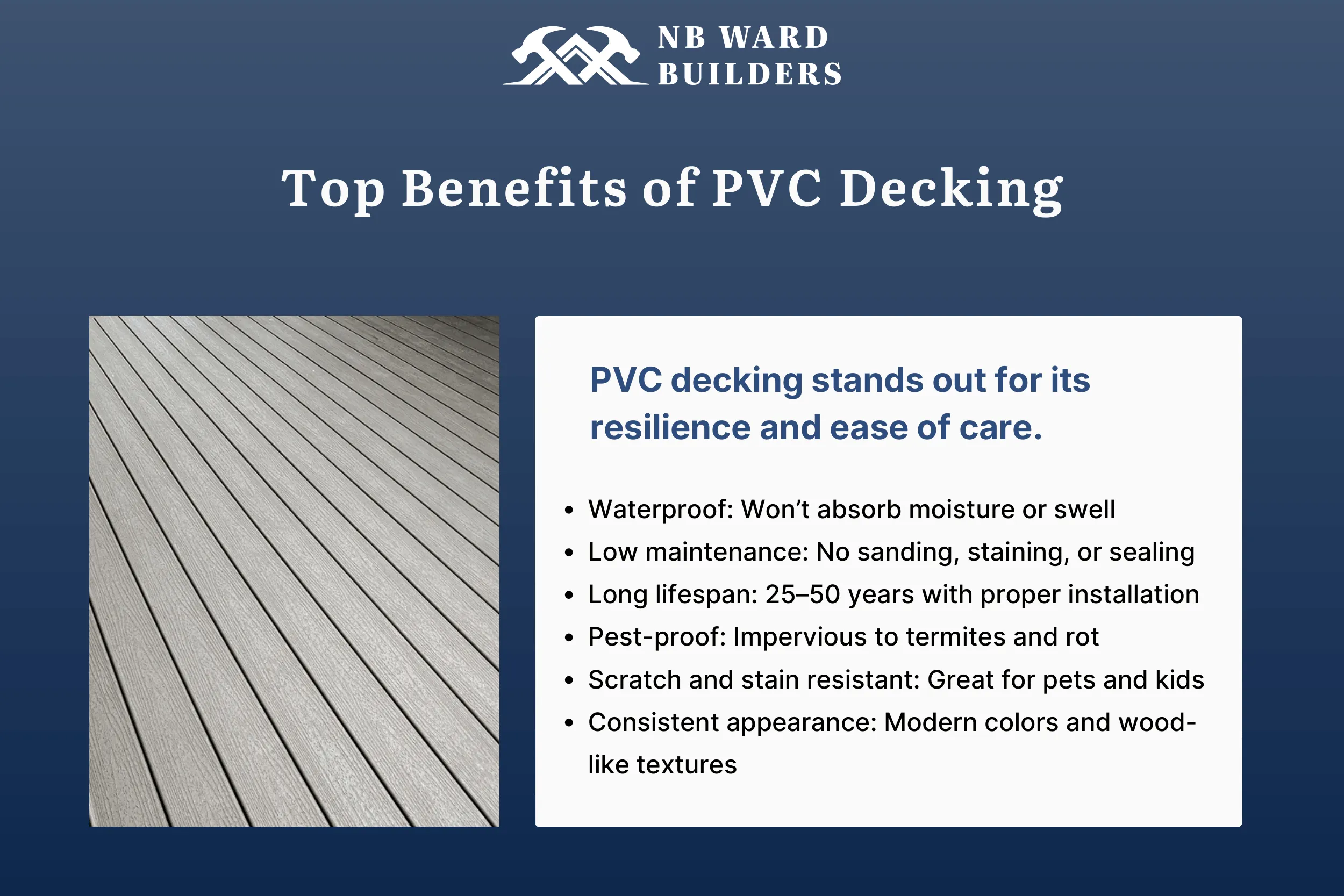
Homeowners are increasingly turning to PVC decking for its impressive list of advantages. Here’s why PVC stands out in the crowded decking market:
- Unmatched Moisture Resistance: PVC can sit in water all day, every day, without absorbing moisture. This makes it ideal for poolside decks, low-to-grade installations, and humid climates where wood and even some composites struggle.
- Low Maintenance: Forget about sanding, staining, or sealing. PVC decking only requires occasional cleaning with soap and water or a garden hose, saving you time and money over the years.
- Long Lifespan: With proper installation, PVC decks can last 25 to 50 years or more, far outpacing pressure-treated wood, which typically lasts 10 to 15 years.
- Superior Pest and Rot Resistance: Because it contains no organic material, PVC is impervious to termites, rot, and mildew.
- Scratch and Stain Resistance: PVC is less susceptible to scratches and stains than composite decking, making it a smart choice for high-traffic areas or homes with pets and children.
- Consistent Appearance: PVC offers a uniform look with a range of modern colors and textures, including options that mimic natural wood grain.
Potential Drawbacks of PVC Decking
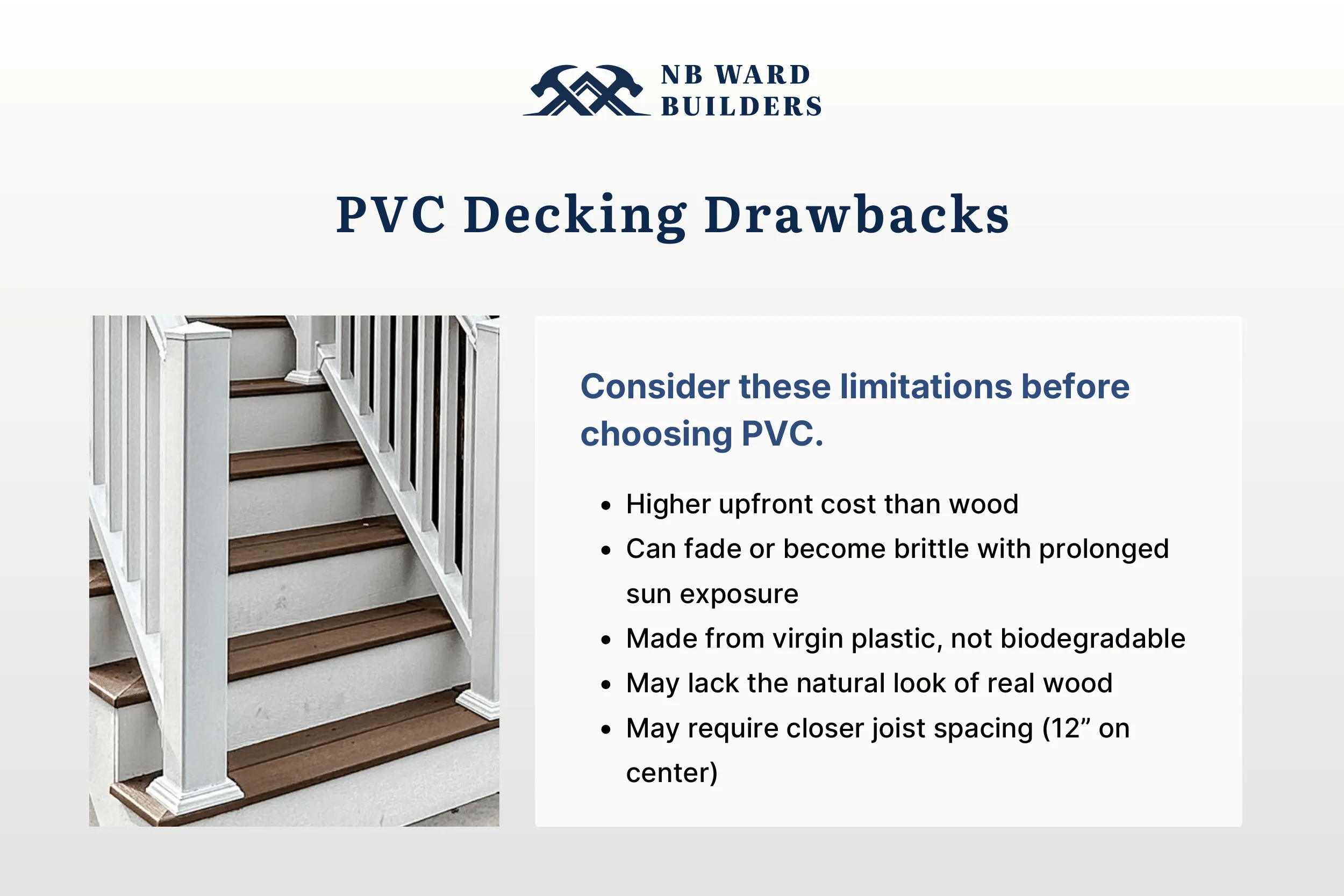
While PVC decking offers many advantages, it’s important to consider its limitations before making a final decision. Understanding these factors will help you determine if PVC is the right fit for your home and lifestyle.
- Higher Upfront Cost: PVC decking typically costs more than pressure-treated wood and is often on par with or slightly higher than composite decking. However, the reduced maintenance and longer lifespan can offset this initial investment over time.
- UV Sensitivity: Over many years, PVC can be susceptible to fading, discoloration, and even brittleness or cracking due to prolonged sun exposure. Choosing lighter colors and using deck covers can help mitigate these effects.
- Environmental Considerations: Most PVC decking is made from virgin plastic, which raises concerns about fossil fuel use and non-biodegradability. Some composite options use more recycled content, which may appeal to eco-conscious homeowners.
- Less Natural Charm: While PVC can mimic wood grain, it may lack the warmth and character of real wood. For those seeking a rustic or traditional look, this could be a drawback.
- Installation Requirements: Some manufacturers recommend closer joist spacing (12 inches on center) to ensure a solid feel, which can increase labor and material costs.
PVC Decking vs. Other Decking Materials
To make the best choice for your home, it’s helpful to compare PVC decking with other popular options: pressure-treated wood and composite decking. Each material has its own strengths and weaknesses, and the right choice depends on your priorities for durability, maintenance, appearance, and budget.
PVC vs. Pressure-Treated Wood
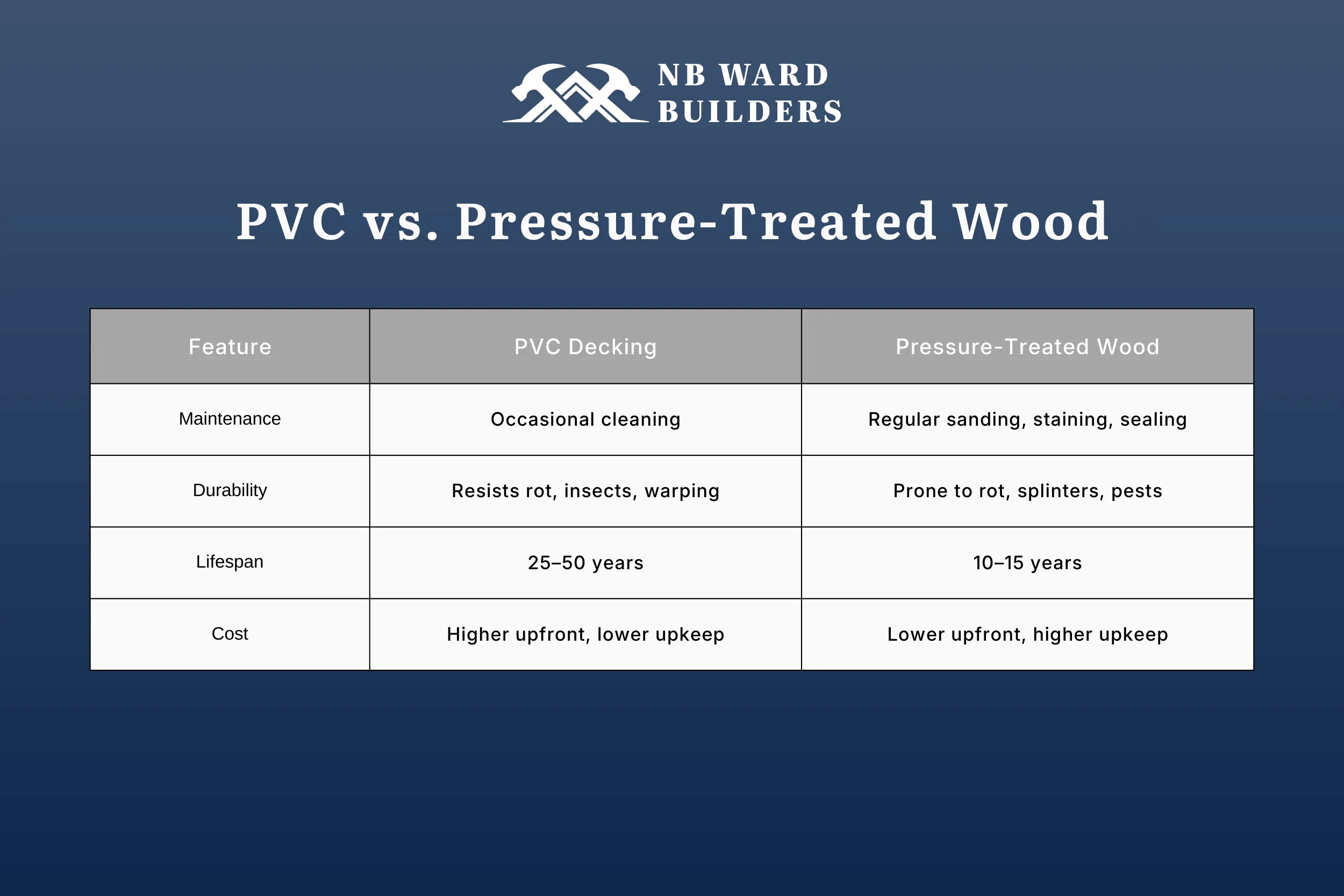
Pressure-treated wood is a classic choice for decks, but it comes with significant maintenance requirements and a shorter lifespan. Here’s how PVC stacks up:
- Maintenance: Wood decks require regular washing, sanding, staining, and sealing every 2-3 years. PVC needs only occasional cleaning.
- Durability: Wood is prone to warping, splintering, rot, and insect damage. PVC is immune to these issues.
- Lifespan: Wood decks typically last 10-15 years, while PVC can last 25-50 years or more.
- Cost: Wood has a lower upfront cost but higher ongoing maintenance expenses. PVC’s higher initial price is often offset by its longevity and minimal upkeep.
PVC vs. Composite Decking
Composite decking blends wood fibers with plastic, offering a middle ground between wood and PVC. Here’s what to consider:
- Moisture Resistance: Composite is more resistant to moisture than wood but can still be vulnerable to mold and mildew, especially if the bottom of the board is not capped. PVC is fully waterproof.
- Scratch and Stain Resistance: PVC outperforms most composites in resisting scratches and stains, making it ideal for busy households.
- Appearance: Both materials offer a range of colors and textures, but composites may have a more natural wood look.
- Cost: Both have similar upfront costs, but PVC’s longer lifespan and lower maintenance can provide better value over time.
Is PVC Decking Right for Your Harrisburg Home?
PVC decking is an excellent choice for homeowners who want a hassle-free, long-lasting, and attractive outdoor space. It’s especially well-suited for:
- Poolside decks or areas with frequent water exposure
- Low-to-grade decks where moisture is a concern
- Busy families seeking minimal maintenance
- Homes in humid or rainy climates
- Those prioritizing durability and a modern look
However, if you prefer the natural charm of wood, are working with a tight budget, or have strong environmental concerns, you may want to explore other options or discuss hybrid solutions with your contractor.
Design and Color Options for PVC Decking
Today’s PVC decking comes in a wide variety of colors, textures, and finishes. Manufacturers offer boards that mimic the look of real wood, complete with grain patterns and subtle color variations. You can also choose from sleek, modern hues for a contemporary aesthetic. This flexibility allows you to match your deck to your home’s style and your personal preferences.
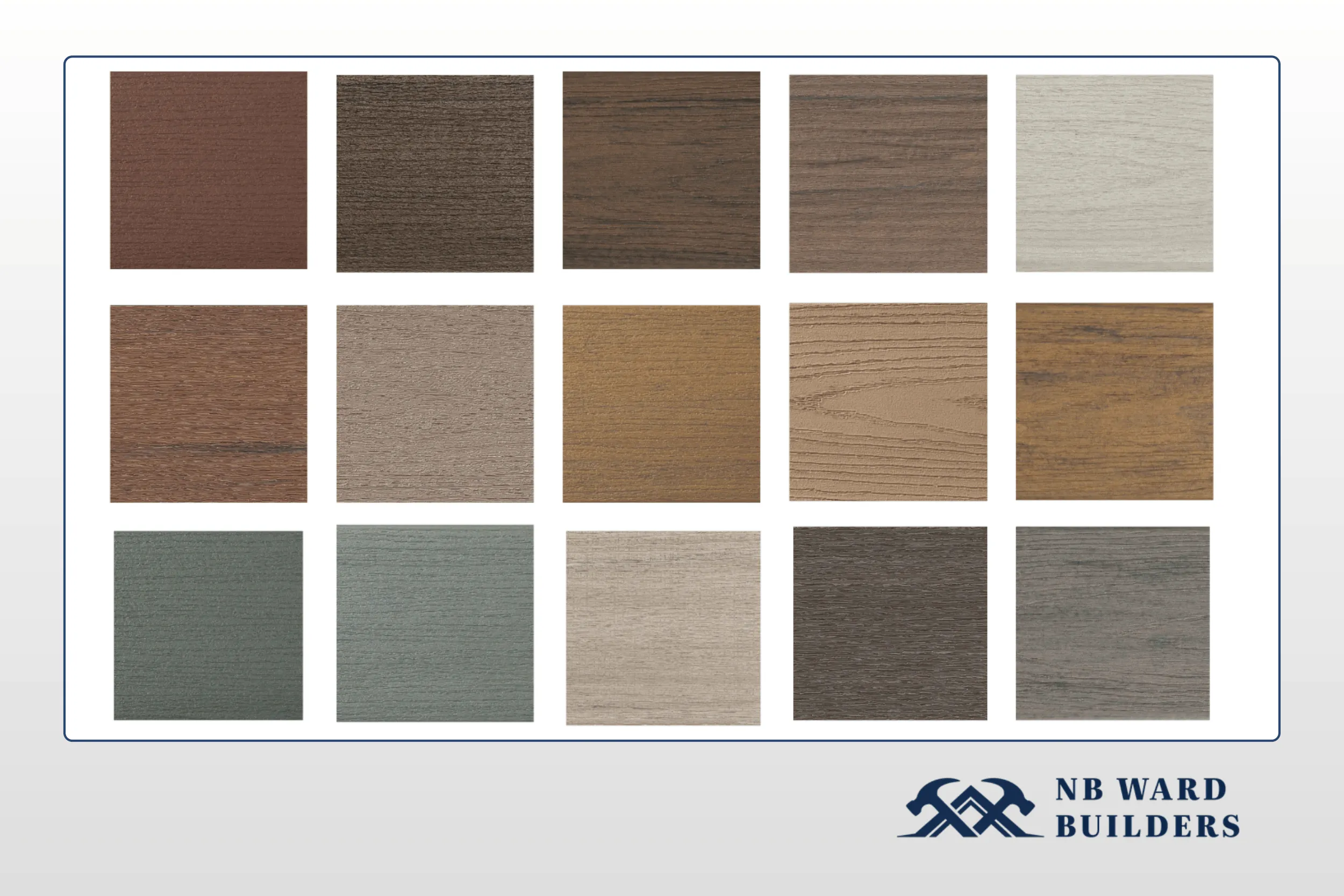
Tips for Choosing the Right Color
When selecting a color for your PVC deck, consider the following:
- Sun Exposure: Lighter colors stay cooler underfoot and are less prone to fading.
- Home Exterior: Choose a shade that complements your siding, trim, and landscaping.
- Maintenance: Darker colors may show dirt and debris more easily, while lighter shades can hide dust and pollen.
Installation Considerations for PVC Decking
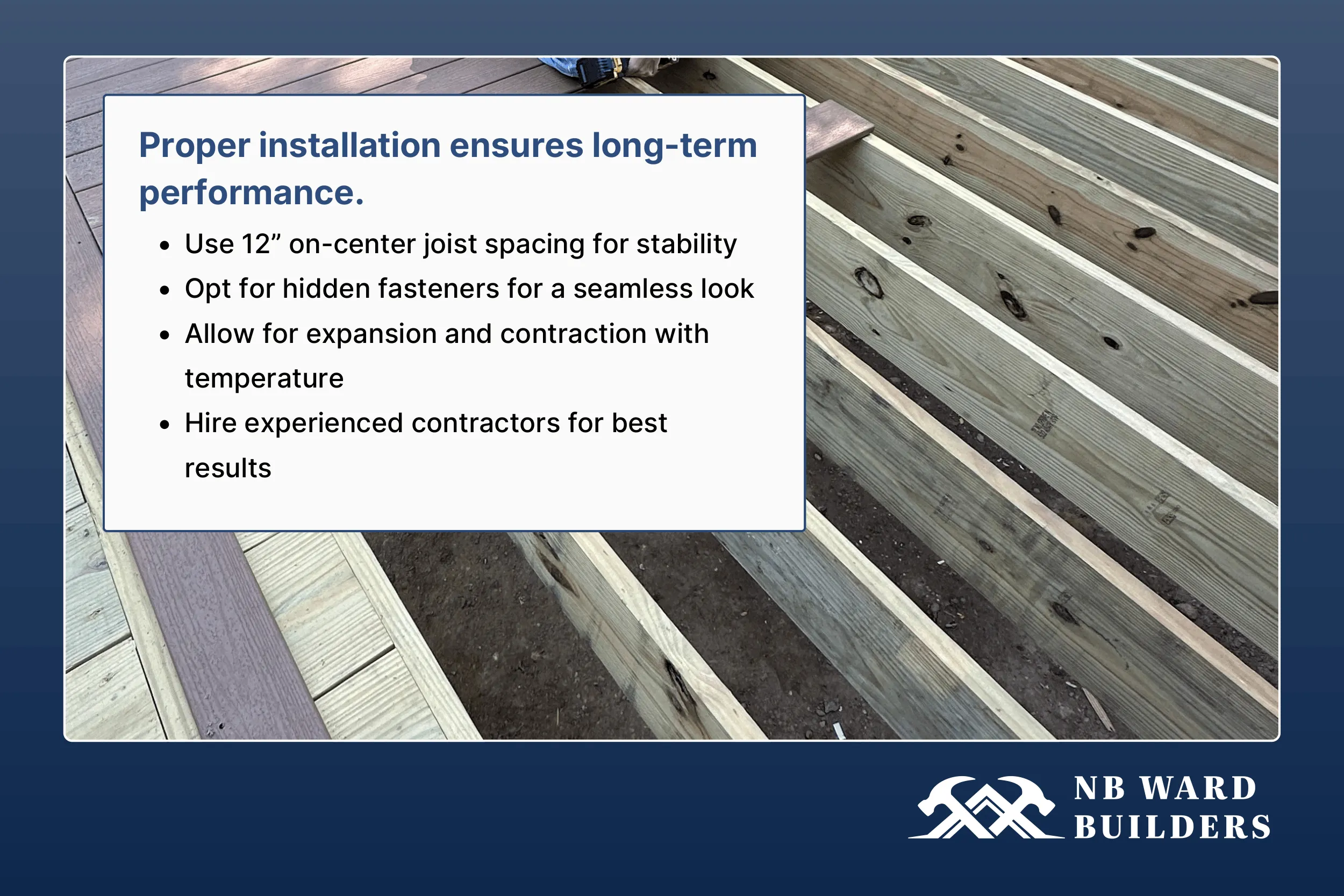
Proper installation is key to maximizing the lifespan and performance of your PVC deck. Here are some important factors to keep in mind:
- Joist Spacing: Many manufacturers recommend 12-inch on-center joist spacing for a solid, stable feel underfoot.
- Fastening Systems: Hidden fasteners create a clean, seamless look and prevent surface damage.
- Expansion and Contraction: PVC expands and contracts with temperature changes, so proper gapping is essential during installation.
- Professional Installation: Working with an experienced contractor ensures your deck is built to last and meets all local codes and safety standards.
Maintaining Your PVC Deck
One of the biggest advantages of PVC decking is its low maintenance requirements. To keep your deck looking its best:
- Sweep regularly to remove leaves and debris.
- Wash with soap and water or a garden hose as needed.
- Avoid harsh chemicals or abrasive cleaners that could damage the surface.
- Inspect periodically for any signs of damage or wear, especially after severe weather.
Environmental Impact: What to Know
While PVC decking offers many practical benefits, it’s important to consider its environmental footprint. Most PVC boards are made from virgin plastic, which is derived from fossil fuels and is not biodegradable. Some composite decking options use more recycled content, which may be preferable for eco-conscious homeowners. If sustainability is a top priority, discuss available options with your contractor to find the best fit for your values and needs.
Why Choose NB Ward Builders for Your PVC Deck Project?
At NB Ward Builders, we understand that your deck is more than just an outdoor space, it’s an extension of your home and a place for making memories. Our team brings over 15 years of experience in designing and building custom decks throughout Harrisburg, PA. We work with top-quality PVC decking materials to deliver results that are beautiful, durable, and tailored to your lifestyle.
When you choose NB Ward Builders, you benefit from:
- Expert guidance on material selection and design
- Professional installation for maximum longevity
- Attention to detail and customer satisfaction
- Clear communication and transparent pricing
Ready to transform your outdoor living space with a new PVC deck? Contact NB Ward Builders today to schedule a consultation and discover how we can bring your vision to life.

%201.svg)
%201.svg)
%201.svg)

