
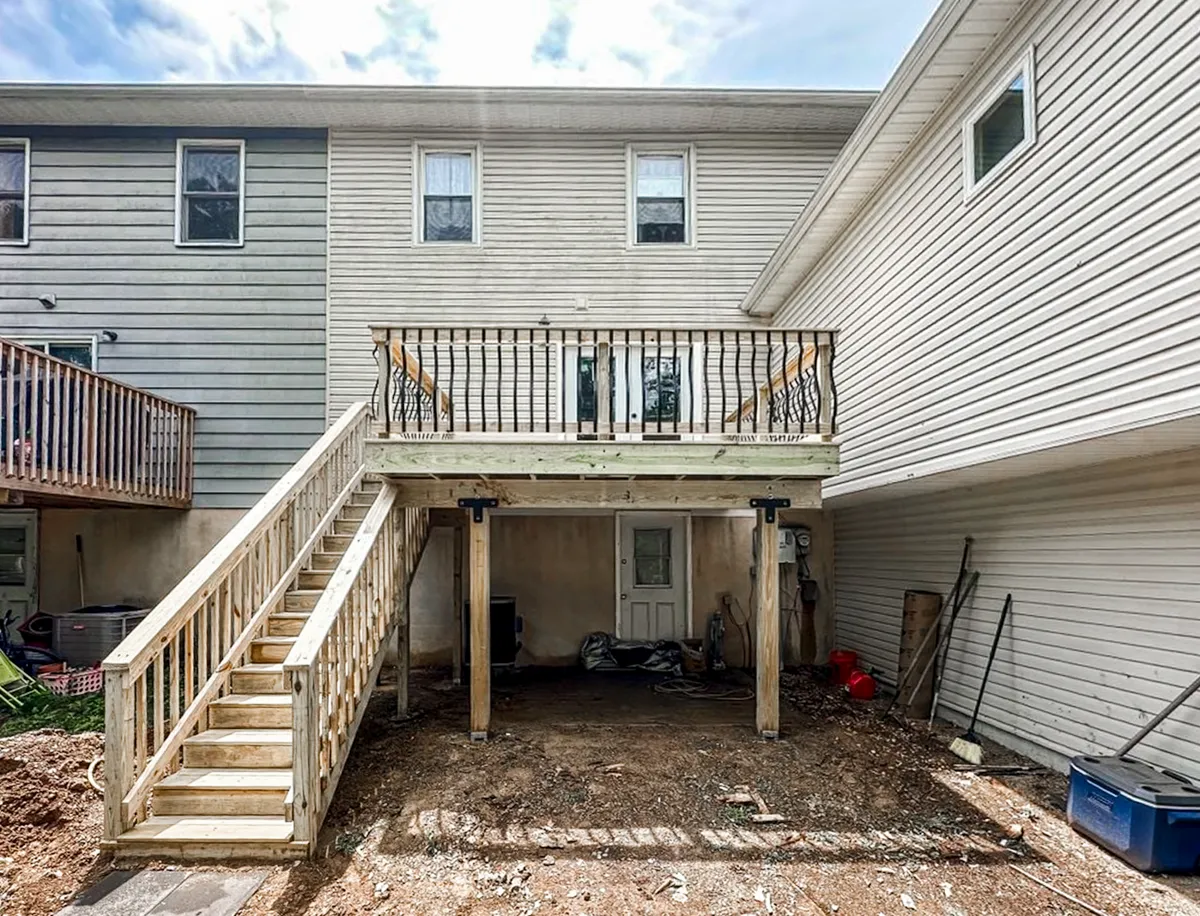
Pressure treated lumber remains among the most popular materials for building decks in Pennsylvania, thanks to its durability, affordability, and proven ability to withstand the region’s challenging climate. If you’re considering a new deck or looking to upgrade your outdoor space, understanding how pressure treated wood is made, how long it lasts, and what upgrade options are available can help you make the best decision for your home and budget.
Located In Harrisburg, PA, NB Ward Builders bring over 15 years of experience to every custom deck build. If you have an upcoming project in mind, reach out to discuss materials options that best fit your goals.
What Is Pressure Treated Lumber and How Is It Made?
Pressure treated lumber is standard softwood, most often Southern Yellow Pine, that has been infused with chemical preservatives to protect it from rot, fungal decay, and insect damage. The treatment process involves placing the wood in a sealed cylinder, filling it with water-based preservatives, and then applying high pressure to force these chemicals deep into the wood fibers. This ensures protection throughout the entire piece, not just on the surface, making it ideal for outdoor structures exposed to the elements, such as decks, fences, and pergolas.
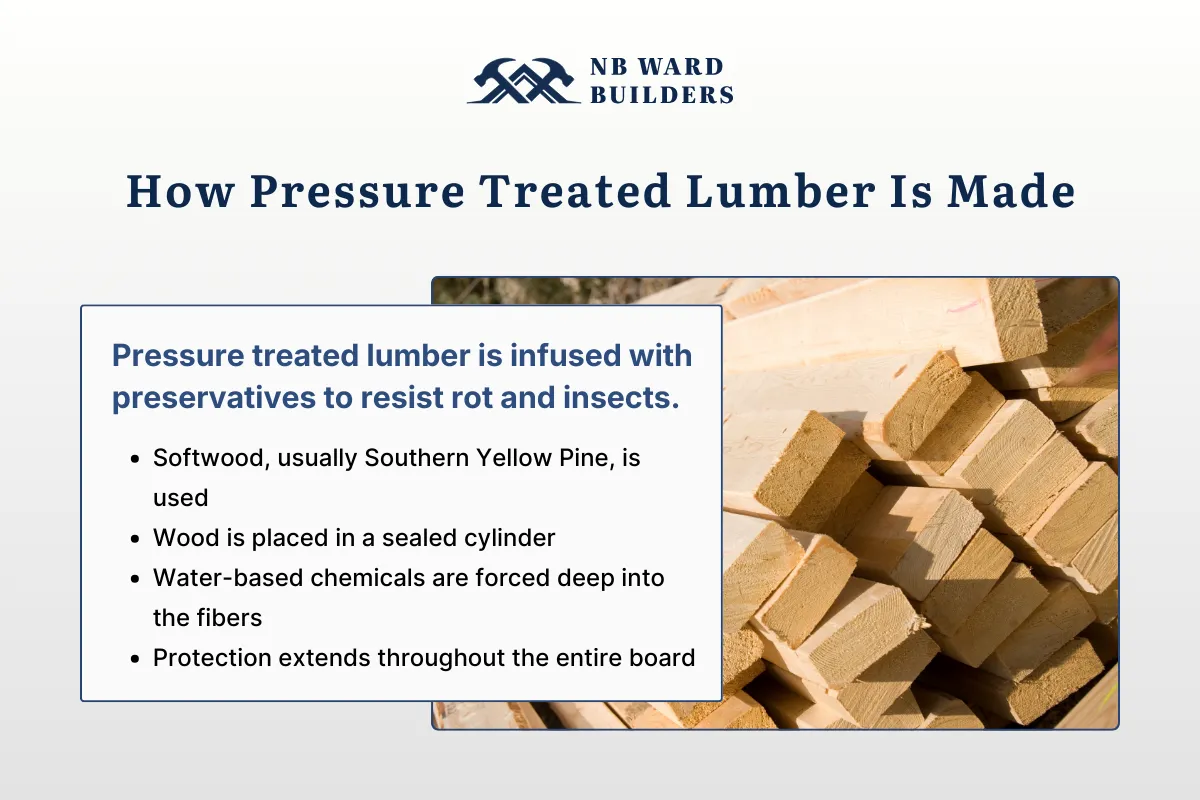
The chemicals used in pressure treatment deter termites, carpenter ants, and other pests, while also providing significant resistance to moisture. This makes pressure treated lumber especially suitable for high-humidity areas or locations with direct water exposure, such as docks and boardwalks. The result is a stable, long-lasting foundation for decks and patios that can withstand Pennsylvania’s freeze–thaw cycles, snow, and summer humidity.
Why Pressure Treated Lumber Is the Top Choice for Decks in Pennsylvania
Pressure treated wood is engineered specifically for outdoor use. Without this treatment, wood exposed to the elements would quickly rot and deteriorate. The deep penetration of preservatives ensures that the wood remains durable and structurally sound over time, even in harsh weather conditions.
For Pennsylvania homeowners, the benefits of pressure treated lumber include:
- Enhanced Durability: The treatment process protects against rot, decay, and insect damage, extending the wood’s lifespan for outdoor use.
- Moisture Resistance: Treated lumber stands up to rain, snow, and humidity, making it ideal for the region’s climate.
- Affordability: Pressure treated decking is typically much less expensive than composite or tropical hardwood alternatives, making it a smart choice for budget-conscious homeowners.
- Availability: Readily available in a variety of sizes and grades to suit different deck designs and budgets.
These advantages make pressure treated lumber the go-to material for decks, especially when paired with proper design and maintenance practices.
Understanding Pressure Treated Lumber Grades and Use Categories
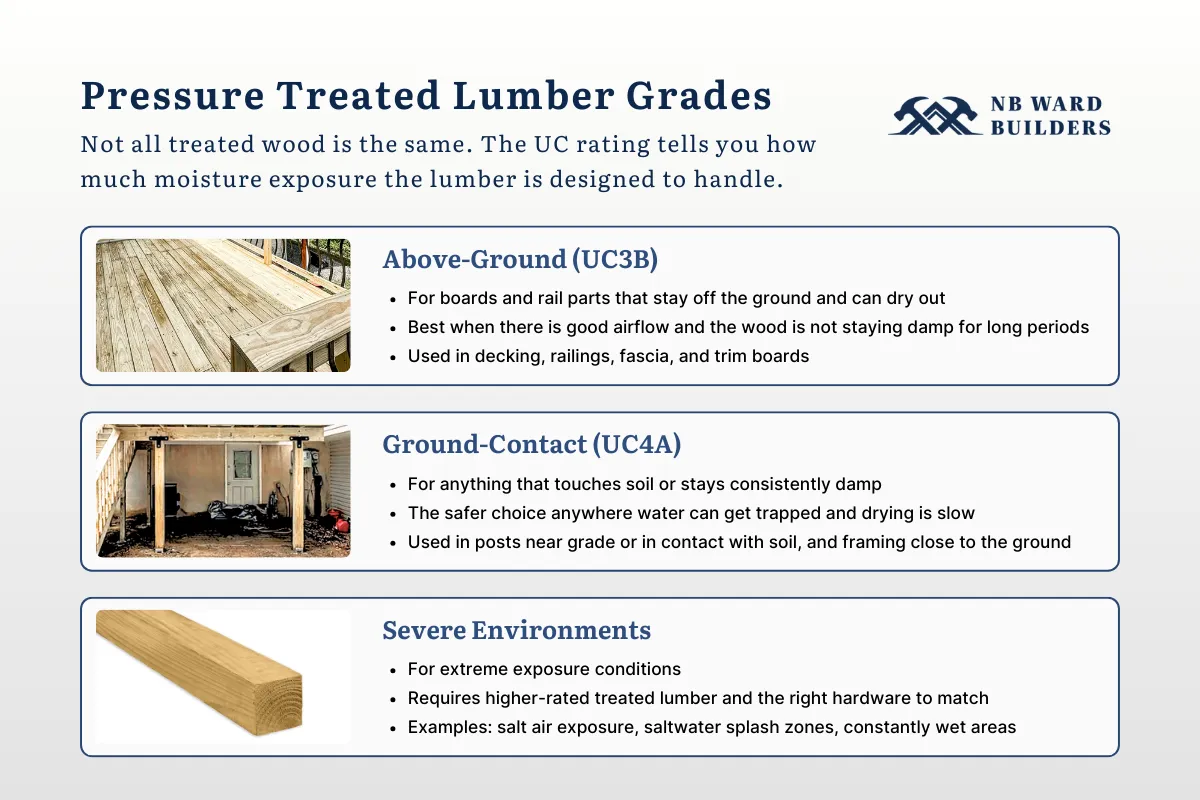
Not all pressure treated wood is the same. Different grades and treatment levels are designed for specific environments and uses. Choosing the correct type is critical for your deck’s performance and longevity.
- Above-Ground (UC3B): Designed for decking boards, railings, fascia, and trim that are exposed to weather but shed water easily. This is the most common category for deck surfaces.
- Ground-Contact (UC4A): Intended for posts, beams, and framing that touch the ground or are exposed to high moisture. Using ground-contact rated lumber for these components is essential to prevent premature failure.
- Severe Environments: Some pressure treated wood is formulated for extreme conditions, such as saltwater exposure or constant wetness. These are less common for residential decks but may be needed for special applications.
Always ensure your builder uses the correct use category for each part of your deck. For example, deck posts should be ground-contact rated, while the walking surface can use above-ground treated boards. This approach maximizes both safety and lifespan.
How Long Does a Pressure Treated Deck Last in Pennsylvania?
One of the main reasons homeowners choose pressure treated lumber is its impressive lifespan, especially when installed and maintained correctly. In Pennsylvania’s four-season climate, decks face snow, ice, humidity, and UV exposure. Here’s what you can expect:
- Deck Framing and Posts: When built with ground-contact rated lumber and proper drainage, these structural elements can last 20–30 years. Good ventilation and prompt repair of any water issues are key to reaching the upper end of this range.
- Decking Boards: The visible walking surface, made from above-ground treated lumber, typically lasts 15–20 years before significant wear, checking, or decay require resurfacing. Regular cleaning, sealing, and maintenance help maximize this lifespan.
Using the correct use category and ensuring good airflow under the deck are especially important in wetter or snowy regions like Pennsylvania. Proper installation and ongoing care are the best ways to protect your investment and enjoy your deck for decades.
Maintenance Tips to Extend the Life of Your Pressure Treated Deck
While pressure treated lumber is designed to resist rot and decay, regular maintenance is essential to keep your deck looking and performing its best. Here are some practical tips:
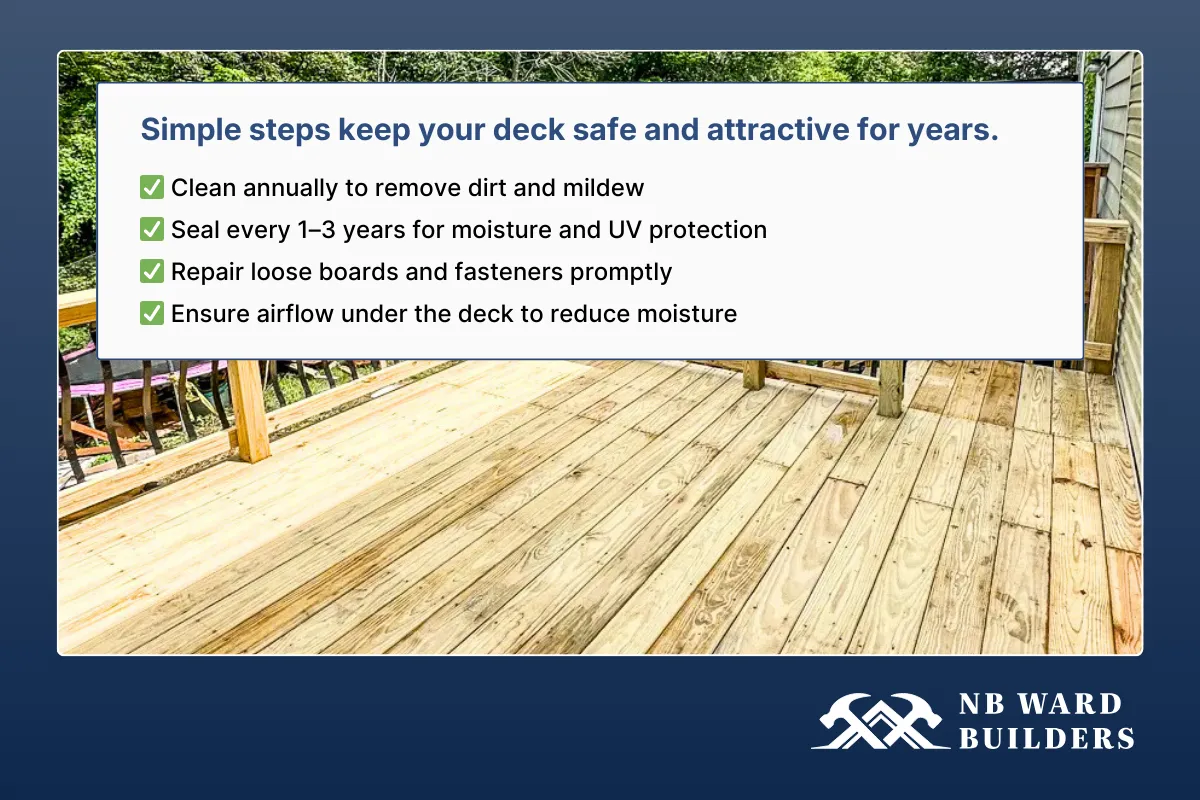
- Annual Cleaning: Sweep debris and wash the deck with a mild cleaner to remove dirt, mold, and mildew.
- Sealing: Apply a water-repellent sealer every 1–3 years to protect against moisture and UV damage. This helps prevent cracking, splintering, and fading.
- Prompt Repairs: Address any standing water, loose boards, or damaged fasteners immediately to prevent further deterioration.
- Ventilation: Ensure there is adequate airflow beneath the deck to reduce moisture buildup and extend the life of the framing.
Following these steps will help your pressure treated deck remain safe, attractive, and functional for many years.
Popular Upgrades for Pressure Treated Decks
Pressure treated decks offer a solid foundation for a variety of upgrades that can enhance both appearance and usability. Many homeowners choose to invest in features that give their deck a more custom, high-end look while maintaining the economic advantages of treated lumber.
Hidden Fastener Systems: Cleaner Look and Fewer Splinters
Hidden fastener systems use clips, screws started from underneath, or grooved boards to secure decking without visible hardware. This creates a smooth, modern surface and reduces the risk of splinters around fasteners. It’s a popular upgrade for homeowners seeking a more polished finish.
Picture-Frame Borders: A High-End, Custom Appearance
Picture-frame borders involve running a contrasting or mitered board around the deck’s perimeter. This upgrade:
- Hides cut board ends and reduces checking at exposed edges.
- Creates a more finished, “custom” look similar to composite decks.
- Provides a clean line against fascia and stair openings.
Picture-frame borders are a cost-effective way to elevate the look of a pressure treated deck and are often paired with upgraded trim and fascia boards for a cohesive design.
Decorative Fascia, Trim, and Upgraded Railings
Adding decorative fascia and trim boards to cover framing and rim joists gives your deck a more polished appearance. Upgraded railings, such as metal, composite, or higher-grade wood, can be attached to a pressure treated structure, balancing cost and aesthetics. These enhancements not only improve curb appeal but also increase safety and usability.
Combining Ground-Contact and Above-Ground Treated Lumber
For maximum strength and cost-effectiveness, many builders use ground-contact rated treated lumber for posts and beams, while installing standard above-ground decking boards on top. This approach ensures the most vulnerable parts of the deck are protected, while keeping material costs in check.

Choosing the Right Builder for Your Pressure Treated Deck
Building a long-lasting, beautiful deck requires more than just quality materials. The expertise of your builder plays a crucial role in ensuring proper installation, correct use of lumber grades, and attention to detail in upgrades and finishes. Look for a contractor with:
- Experience in designing and building pressure treated decks in Pennsylvania’s climate.
- Knowledge of local building codes and best practices for deck construction.
- A portfolio of completed projects featuring upgrades like hidden fasteners, picture-frame borders, and custom railings.
- Clear communication and a commitment to customer satisfaction.
NB Ward Builders have spent over 15 years helping Harrisburg, PA homeowners upgrade and improve their outdoor spaces. Our team understands the unique challenges of building decks in Central Pennsylvania and can guide you through every step, from material selection to design and finishing touches.
Ready to Build or Upgrade Your Deck?
Pressure treated lumber offers Pennsylvania homeowners a durable, cost-effective foundation for beautiful outdoor living spaces. With the right design, upgrades, and maintenance, your deck can provide decades of enjoyment and add lasting value to your home.
NB Ward Builders specialize in custom pressure treated decks, offering expert design, quality craftsmanship, and a full range of upgrade options to fit your style and budget. If you’re ready to start your project or have questions about the best materials and features for your home, contact us today. Let us help you create an outdoor space you’ll love for years to come.
Frequently Asked Questions About Pressure Treated Decks
Is pressure treated lumber safe for families and pets?
Modern pressure treated lumber uses water-based preservatives that are safe for residential use when handled and installed properly. Always follow manufacturer guidelines for cutting, sealing, and disposing of scraps. Sealing the deck surface further reduces any potential exposure.
Can I paint or stain my pressure treated deck?
Yes, but it’s important to let new pressure treated lumber dry out for several months before applying paint or stain. This allows the wood to release excess moisture and ensures better adhesion. Use high-quality exterior products designed for treated wood for best results.
What fasteners should I use with pressure treated lumber?
Use hot-dipped galvanized or stainless steel fasteners and hardware, as the preservatives in treated wood can corrode standard steel. This is especially important for structural connections and railings.
How do I know if my deck needs resurfacing or replacement?
If you notice widespread checking, splintering, or soft spots in the decking boards, it may be time to resurface. If the framing or posts show signs of rot or structural weakness, a full replacement may be necessary. Regular inspections help catch issues early.

%201.svg)
%201.svg)
%201.svg)

